

DALI Drivers: Revolutionizing Smart Lighting Control
In the rapidly evolving world of intelligent lighting systems, DALI (Digital Addressable Lighting Interface) drivers have emerged as the gold standard for commercial and architectural lighting control. As building automation becomes increasingly sophisticated, understanding DALI technology is essential for electrical contractors, lighting designers, facility managers, and building owners who want to maximize energy efficiency while creating responsive, adaptable lighting environments.
What is a DALI Driver?
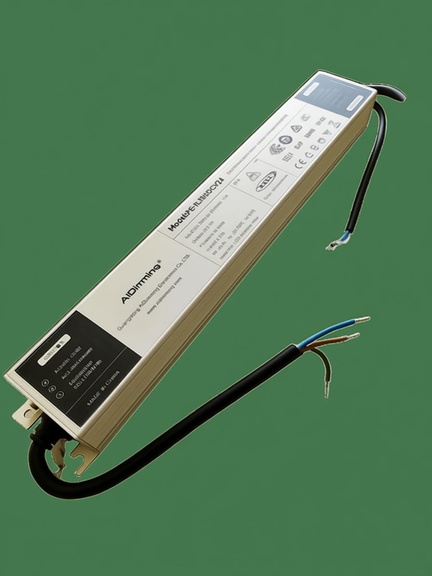
A DALI driver is an electronic device that regulates power to LED lighting fixtures while enabling digital communication and control. Unlike traditional drivers that simply convert AC power to the DC power required by LEDs, DALI drivers incorporate intelligent control capabilities that allow each fixture to be individually addressed, dimmed, and monitored through a standardized digital protocol.
The DALI protocol, established by the IEC 62386 international standard, creates a two-way communication channel between lighting control systems and individual fixtures. This bidirectional communication enables not only precise control of lighting levels but also valuable feedback about fixture status, energy consumption, and maintenance requirements.
At Sarlux Electronics, our DALI drivers represent the cutting edge of this technology, combining robust power regulation with seamless integration capabilities that make intelligent lighting accessible for projects of any scale.
How DALI Drivers Work: Understanding the Technology
DALI drivers operate on a fundamental principle: separating the power delivery function from the control signal. The driver receives standard mains power (typically 120-277VAC or 220-240VAC depending on region) and converts it to the low-voltage DC power required by LED arrays. Simultaneously, it maintains a separate low-voltage control bus that carries digital addressing and dimming commands.
The control bus operates at a safe 16 volts and can connect up to 64 individual devices (drivers or control inputs) on a single DALI line. Each device receives a unique address, allowing the control system to communicate with specific fixtures or groups of fixtures independently. This addressability is what distinguishes DALI from analog dimming protocols like 0-10V, where all connected fixtures respond identically to the same signal.
When a DALI controller sends a command, it transmits a digital message that includes the target address and the desired action, such as dimming to a specific level, joining a particular scene, or reporting current status. The driver receives this message, executes the command, and can send confirmation back to the controller. This feedback loop enables sophisticated monitoring and diagnostic capabilities that traditional lighting systems cannot provide.
Key Benefits of DALI Driver Technology
Precise Individual Control
The most significant advantage of DALI drivers is their ability to control each fixture independently. In a large office space, conference room, or retail environment, this means different zones can operate at different brightness levels simultaneously. A single control system can create countless lighting scenarios without additional wiring or complexity.
This granular control extends beyond simple on-off or dimming functions. DALI drivers support 256 distinct brightness levels, providing smooth, flicker-free dimming throughout the entire range. This precision enables lighting designers to create subtle lighting effects and ensures comfortable visual conditions for building occupants.
Energy Efficiency and Sustainability
DALI technology delivers substantial energy savings through multiple mechanisms. Precise dimming control means lights operate at exactly the level required for each task or time of day, eliminating the waste associated with over-lighting. Daylight harvesting systems can automatically reduce artificial lighting when natural light is available, and occupancy sensors can dim or turn off lights in unoccupied spaces.
Studies have demonstrated that DALI-controlled lighting systems typically reduce energy consumption by 30-60% compared to traditional switching systems, with the exact savings depending on building type, usage patterns, and control strategies implemented. Over the lifespan of a commercial lighting installation, these savings translate to significant reductions in both operational costs and carbon footprint.

Simplified Installation and Commissioning
Despite their advanced capabilities, DALI drivers actually simplify the installation process. The DALI control bus uses simple two-wire cabling with no polarity requirements, and the low voltage eliminates special conduit or safety considerations. Multiple DALI lines can be connected to create larger systems, and devices can be added or reconfigured without affecting existing installations.
Commissioning a DALI system involves software-based addressing and programming rather than physical switch rewiring. Lighting zones, scenes, and control relationships can be modified through software at any time, providing flexibility that traditional hard-wired systems cannot match. This adaptability is particularly valuable in spaces that undergo frequent reconfiguration, such as open-plan offices or multi-purpose venues.
Future-Proof Technology
DALI is an open standard supported by hundreds of manufacturers worldwide. This ensures compatibility between components from different suppliers and protects against vendor lock-in. As the standard evolves, DALI systems can often be upgraded through firmware updates rather than hardware replacement.
The recent introduction of DALI-2 certification provides even greater assurance of interoperability and forward compatibility. DALI-2 certified products undergo rigorous testing to ensure they meet strict performance and compatibility requirements, giving specifiers confidence that their lighting control infrastructure will remain functional and upgradeable for decades.
DALI Driver Applications: Where Intelligence Meets Illumination
Commercial Office Environments
Modern office buildings represent one of the most compelling applications for DALI driver technology. Open-plan workspaces benefit from individual desk lighting control, allowing employees to customize their lighting while the facility management system optimizes overall energy use. Conference rooms can store multiple lighting scenes for presentations, video conferences, or collaborative work sessions, all accessible through wall controls or building management systems.
DALI integration with occupancy sensors and daylight harvesting systems creates responsive environments that automatically adjust to usage patterns and natural light availability. This not only reduces energy consumption but also enhances occupant comfort and productivity.
Retail and Hospitality
Retail environments use DALI drivers to create dynamic lighting that highlights merchandise, guides customer flow, and establishes brand identity. The ability to program and recall complex lighting scenes allows retailers to easily transition between daytime shopping environments and evening atmospheres, or to emphasize seasonal displays and promotional areas.
Hotels and restaurants leverage DALI control to create memorable guest experiences. Lobby areas can shift from bright, welcoming environments during check-in hours to intimate, relaxed settings in the evening. Restaurants can adjust lighting throughout the dining experience, and ballrooms can seamlessly transition between configurations for different events.
Healthcare Facilities
Healthcare environments have particularly stringent lighting requirements that DALI drivers address effectively. Patient rooms can provide bright task lighting for medical procedures, comfortable ambient lighting for recovery, and gentle night lighting that supports rest without compromising safety. Individual patient control over bedside lighting improves comfort and satisfaction.
Circadian rhythm lighting programs, which gradually shift color temperature throughout the day to support natural biological rhythms, are easily implemented with DALI drivers that support tunable white technology. Research increasingly demonstrates that appropriate lighting patterns can improve patient outcomes, reduce medication requirements, and support faster recovery.
Educational Institutions
Schools and universities use DALI-controlled lighting to create environments optimized for learning. Classrooms can adjust lighting levels based on activities, from bright task lighting for detailed work to dimmed settings for multimedia presentations. Research has shown that appropriate lighting levels and control improve student attention, reduce fatigue, and support better learning outcomes.
The flexibility of DALI systems allows educational facilities to reconfigure spaces as needs change, without the expense of rewiring. A classroom can easily become a meeting space, laboratory, or testing center with appropriate lighting for each function.
Choosing the Right DALI Driver: Technical Considerations
Power Rating and LED Compatibility
The first consideration when selecting a DALI driver is ensuring adequate power capacity for the connected LED load. Drivers are rated by output wattage, and it’s essential to choose a model that matches or slightly exceeds the total wattage of the LED array being powered. Operating a driver at or near its maximum capacity can reduce lifespan and efficiency, so selecting a driver rated 10-20% above the actual load is often recommended.
LED compatibility extends beyond simple wattage matching. Different LED products have varying current requirements, forward voltage characteristics, and dimming behaviors. High-quality DALI drivers from Sarlux Electronics feature wide output voltage ranges and current regulation capabilities that ensure compatibility with diverse LED technologies, from standard white LEDs to tunable white and RGB color-changing systems.
Output Configuration: Constant Current vs. Constant Voltage
DALI drivers are available in both constant current and constant voltage configurations, and selecting the appropriate type depends on the LED fixture design.
Constant current drivers maintain a fixed current output while voltage varies within a specified range. These drivers are typically used with LED arrays configured in series, which is common in linear fixtures, downlights, and many architectural lighting products. Constant current operation ensures uniform brightness across all LEDs in the string and protects against current overload.
Constant voltage drivers maintain a fixed voltage output (commonly 12V or 24V) while current varies based on load. These drivers power LED strips, modules, and fixtures with built-in current regulation. Constant voltage systems offer flexibility in configuring multiple parallel LED loads and are popular in cove lighting, under-cabinet installations, and decorative applications.
Environmental and Installation Requirements
The operating environment significantly influences driver selection. Indoor drivers designed for dry locations have different construction than those rated for damp or wet locations. Outdoor installations, parking structures, and areas subject to moisture require drivers with appropriate IP (Ingress Protection) ratings that prevent water and dust infiltration.
Temperature considerations are equally important. LED drivers generate heat during operation, and ambient temperature affects both performance and lifespan. Drivers installed in enclosed fixtures, ceiling plenums, or outdoor environments in hot climates must be rated for the expected temperature range. Thermal management features like over-temperature protection ensure safe operation even in challenging conditions.
Dimming Performance and Range
While all DALI drivers support dimming, performance characteristics vary among models. Key specifications include minimum dimming level, dimming curve linearity, and absence of visible flicker or audible noise. Premium DALI drivers can dim LEDs down to 1% or less of full output with smooth, flicker-free performance throughout the entire range.
The dimming curve describes how perceived brightness changes in relation to the DALI dimming level. Logarithmic dimming curves more closely match human perception of brightness and are preferred for applications where precise control of perceived light levels is important. Some advanced DALI drivers allow dimming curve customization to optimize performance for specific applications.
Efficiency and Power Factor
Driver efficiency directly impacts operational costs and heat generation. High-efficiency drivers waste less energy as heat, reducing cooling loads and extending both driver and LED lifespan. Look for drivers with efficiency ratings above 90%, with the best models achieving 94-96% efficiency.
Power factor measures how effectively the driver converts AC input power to useful output power. A power factor approaching 1.0 (unity) indicates efficient use of electrical power with minimal reactive current. Many jurisdictions and utility companies require power factors above 0.90 for commercial lighting installations, and high power factor reduces stress on electrical distribution systems.
DALI-2: The Next Generation Standard
The DALI Alliance introduced DALI-2 certification to address interoperability challenges and ensure consistent performance across manufacturers. DALI-2 builds on the original standard with enhanced specifications, mandatory testing requirements, and expanded device categories.
Key improvements in DALI-2 include standardized control device definitions, ensuring that switches, sensors, and controllers from different manufacturers work together predictably. Enhanced certification testing verifies not just basic communication but also real-world performance characteristics like dimming smoothness, response timing, and power-up behavior.
For new installations, specifying DALI-2 certified drivers provides assurance of compatibility and future-proofing. DALI-2 devices are backward compatible with original DALI systems, but the enhanced certification provides greater confidence in long-term system reliability and expandability.
Integration with Building Management Systems
One of DALI technology’s most powerful capabilities is seamless integration with broader building management systems (BMS). Through DALI gateways and interfaces, lighting control becomes part of a comprehensive approach to building automation that includes HVAC, security, access control, and energy management.
This integration enables sophisticated control strategies that respond to multiple building systems simultaneously. When a conference room is reserved in the calendar system, the BMS can automatically prepare the space by adjusting lighting, temperature, and audiovisual equipment. Occupancy data from the lighting system can inform HVAC operation, reducing conditioning in unoccupied zones.
Energy management systems can monitor real-time lighting consumption and adjust operation to minimize demand charges, shift load to off-peak periods, or respond to utility demand response programs. The detailed operational data available from DALI systems supports continuous commissioning and optimization throughout the building lifecycle.
Installation Best Practices for DALI Driver Systems
Planning and Design
Successful DALI installations begin with thorough planning. Lighting zones should be defined based on control requirements, with consideration for future flexibility. While DALI supports up to 64 devices per line, practical installations often use 40-50 devices per line to allow for expansion and maintain responsive performance.
Control wiring should be planned to minimize distance from the DALI power supply, as the control bus has maximum length limitations (typically 300 meters without repeaters). In large installations, multiple DALI lines connected through gateways provide better performance than single oversized networks.
Wiring and Installation
DALI control wiring uses simple two-conductor cable with no polarity requirements, but following best practices ensures reliable operation. Maintain separation between DALI control wiring and mains power wiring to prevent electrical interference. Where they must cross, do so at right angles to minimize coupling.
Many installers use different color cables for mains power and DALI control to prevent confusion during installation and maintenance. Clearly labeling DALI devices with their addresses during installation simplifies commissioning and future troubleshooting.
Commissioning and Programming
DALI system commissioning involves addressing devices, organizing them into groups, and programming scenes and control behaviors. Modern commissioning software makes this process straightforward, automatically discovering devices on the network and providing intuitive interfaces for configuration.
Testing should verify that all devices respond correctly to control commands, dimming operates smoothly throughout the range, and scenes recall accurately. Document the final configuration thoroughly, including address assignments, group memberships, and scene definitions, to support future modifications and troubleshooting.
Maintenance and Troubleshooting
DALI systems provide built-in diagnostic capabilities that simplify maintenance. Drivers can report lamp failures, operational hours, and status information to the control system, enabling predictive maintenance that addresses issues before they impact occupants.
Common troubleshooting begins with verifying power supply operation and DALI bus voltage (should measure approximately 16V DC). Communication issues often relate to wiring problems, excessive cable length, or address conflicts. The bidirectional nature of DALI communication allows sophisticated diagnostic tools to query devices and identify problems remotely.
Regular maintenance should include verifying control system operation, checking for firmware updates that might add features or improve performance, and reviewing energy consumption data to ensure the system continues to meet efficiency goals.
The Future of DALI Technology
DALI continues to evolve to meet emerging lighting control requirements. The DALI Alliance is developing standards for additional device types, enhanced color control, and tighter integration with IoT (Internet of Things) platforms. As wireless communication technologies mature, hybrid systems combining traditional DALI wiring with wireless control are becoming viable for retrofit applications.
Artificial intelligence and machine learning are beginning to influence lighting control, with systems that learn occupancy patterns, adapt to seasonal changes, and optimize energy use automatically. DALI’s open standard and extensive device ecosystem position it well to incorporate these advanced capabilities as they mature.
Human-centric lighting, which adjusts both intensity and color temperature to support natural circadian rhythms and task requirements, represents another growth area where DALI drivers play a crucial role. As our understanding of lighting’s impact on health, productivity, and wellbeing deepens, control systems must become more sophisticated, and DALI provides the necessary foundation.
Why Choose Sarlux Electronics DALI Drivers
At Sarlux Electronics, we engineer DALI drivers that combine technical excellence with practical reliability. Our products undergo rigorous testing to ensure they meet not just minimum standards but the demanding requirements of real-world installations. DALI-2 certification guarantees compatibility and performance, while our commitment to quality ensures long service life and trouble-free operation.
Our technical support team brings decades of combined experience in lighting control systems and can assist with product selection, system design, and troubleshooting. We understand that successful projects require more than just quality components; they require knowledgeable support throughout the project lifecycle.
We continuously invest in research and development to incorporate the latest technologies and address emerging market needs. Whether you’re designing a sophisticated museum lighting system, outfitting a modern office building, or upgrading aging infrastructure to smart control, Sarlux Electronics provides the DALI drivers and expertise to ensure success.
Conclusion: Embracing Intelligent Lighting Control
DALI driver technology represents a fundamental shift in how we think about lighting systems. Rather than simple on-off switches, modern buildings deserve intelligent, responsive lighting that enhances occupant experience, reduces energy consumption, and adapts to changing needs over time.
The initial investment in DALI-controlled lighting delivers returns through reduced energy costs, lower maintenance requirements, enhanced flexibility, and improved building performance. As energy codes become more stringent and building occupants demand greater control over their environments, DALI technology transitions from luxury to necessity.
For lighting professionals, facility managers, and building owners, understanding DALI drivers and their capabilities is essential for making informed decisions about lighting infrastructure. The technology has matured to the point where it offers reliable, cost-effective solutions for projects of virtually any scale.
At Sarlux Electronics, we’re committed to making intelligent lighting control accessible and practical. Our DALI drivers represent the culmination of engineering expertise, manufacturing quality, and customer-focused design. Contact our team today to discuss your project requirements and discover how DALI technology can transform your lighting systems.