

What is a Home Automation System?
A home automation system is a network of smart devices that work together to control various functions in your house automatically. From smart home automation to complete house automation systems, this technology allows you to manage lighting, temperature, security, and appliances through smartphones, voice commands, or automated schedules.
The home automation technology has transformed from a luxury into an affordable solution for everyday homeowners. Whether you’re looking for a simple home automation system or a comprehensive smart home automation system, understanding the basics helps you make informed decisions.

Why Home Automation Systems are Essential in 2025
The home automation industry has grown tremendously. The global smart home market is expected to reach over $150 billion by 2025. More homeowners are investing in home automation solutions for several compelling reasons.
Smart home automation systems offer convenience that traditional homes cannot match. Imagine controlling your entire home from a single home automation app on your smartphone. This isn’t science fiction – it’s available today through various home automation companies and platforms.
Key Benefits of Home Automation Systems
1. Energy Efficiency and Cost Savings
Home automation systems significantly reduce energy consumption. Smart thermostats and automated lighting systems can cut energy bills by 20-30% annually. The smart home energy management features learn your patterns and optimize usage automatically.
Smart home devices like programmable thermostats adjust heating and cooling based on occupancy. Automated lighting controls ensure lights aren’t left on unnecessarily. These energy-efficient home automation features pay for themselves within 2-3 years.
2. Enhanced Home Security
Home security automation is the most popular reason people invest in smart home technology. A complete home security system includes smart cameras, video doorbells, motion sensors, and smart locks.
Smart home security systems allow real-time monitoring from anywhere. The best home security cameras send instant alerts when unusual activity is detected. Wireless security systems are easier to install than traditional wired systems, making DIY home automation more accessible.
3. Ultimate Convenience
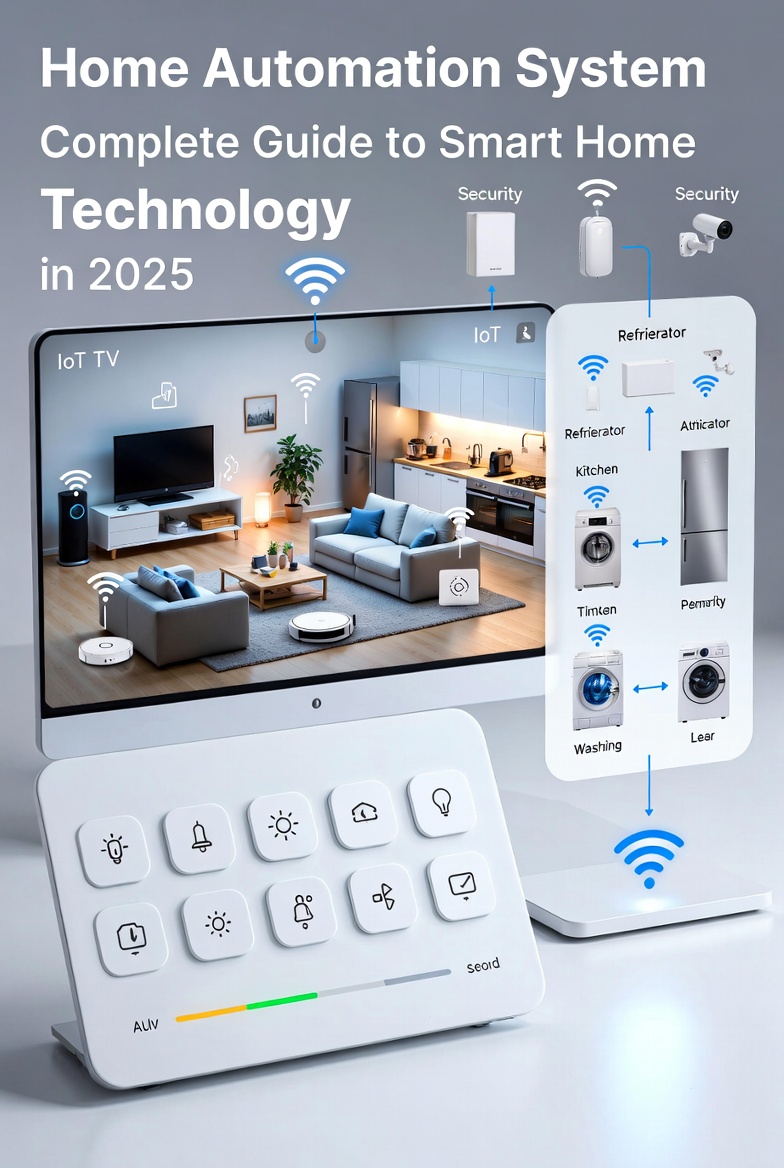
Home automation control puts everything at your fingertips. Voice-controlled home automation through Amazon Alexa, Google Home, or Apple HomeKit means hands-free operation. Simply say “Alexa, turn off all lights” or “Hey Google, set thermostat to 72 degrees.”
Smart home hubs centralize control of all devices. The best home automation hub connects different brands and protocols, creating a unified smart home ecosystem.
4. Increased Property Value
Homes with home automation systems sell faster and for higher prices. Real estate data shows that smart home features can increase property value by 5-10%. Buyers actively seek homes with modern home automation already installed.
Essential Home Automation System Components
Smart Hubs and Controllers
The home automation hub is your system’s brain. Popular smart home hubs include:
- Amazon Echo (Alexa ecosystem)
- Google Nest Hub (Google Home ecosystem)
- Samsung SmartThings Hub (multi-protocol support)
- Apple HomePod (HomeKit automation)
- Hubitat Elevation (local control focus)
Your home automation controller choice determines device compatibility. The best smart home hub depends on your existing devices and preferred voice assistant.
Smart Lighting Systems
Smart lighting is the gateway to home automation. Automated lighting systems offer scheduling, dimming, color changing, and remote control. Top smart light bulbs include:
- Philips Hue (best overall smart lighting)
- LIFX (no hub required)
- Wyze Bulbs (budget-friendly option)
- GE Cync (good HomeKit compatibility)
Smart light switches control traditional bulbs while adding automation capabilities. Motion sensor lights automatically illuminate when you enter rooms, perfect for hallways and bathrooms.
Smart Thermostats
Smart thermostats are essential home automation devices. They learn your schedule and preferences to optimize comfort and efficiency. The best smart thermostats include:
- Google Nest Learning Thermostat (AI-powered learning)
- Ecobee SmartThermostat (room sensors included)
- Honeywell Home T9 (excellent multi-room control)
- Amazon Smart Thermostat (affordable Alexa integration)
These programmable thermostats provide detailed energy reports and can be controlled through home automation apps from anywhere.
Security and Surveillance Systems
Home security automation combines multiple devices for comprehensive protection:
Smart Security Cameras:
- Ring Cameras (best for Alexa users)
- Nest Cameras (excellent video quality)
- Arlo Pro (wire-free flexibility)
- Wyze Cam (budget champion)
Video Doorbells:
- Ring Video Doorbell (most popular)
- Nest Doorbell (best integration)
- Arlo Video Doorbell (best video quality)
Smart Locks:
- August Smart Lock (retrofits existing deadbolts)
- Schlage Encode (built-in WiFi)
- Yale Assure Lock (multiple connectivity options)
Smart Appliances and Devices
Smart home appliances extend automation throughout your home:
- Smart refrigerators (inventory tracking)
- Smart washing machines (remote start)
- Robot vacuums (automated cleaning)
- Smart coffee makers (scheduled brewing)
- Smart garage door openers (remote control and monitoring)
- Smart sprinkler systems (weather-based watering)
Voice Assistants
Voice-controlled automation makes smart homes truly hands-free:
- Amazon Alexa (widest device compatibility)
- Google Assistant (best AI and search integration)
- Apple Siri (strongest privacy features)
Home Automation Protocols and Standards
Understanding home automation protocols ensures device compatibility:
WiFi Home Automation
WiFi smart devices use your existing home network. Easy setup but can congest bandwidth with many devices. Best for smart plugs, cameras, and thermostats.
Zigbee Protocol
Zigbee home automation creates mesh networks for extended range. Low power consumption makes it ideal for sensors and smart bulbs. Requires a Zigbee hub.
Z-Wave Technology
Z-Wave home automation offers excellent reliability and security. Popular in professional home automation systems. Also requires a compatible hub.
Bluetooth Smart Devices
Bluetooth home automation works for devices you control nearby. Limited range but very energy-efficient.
Matter Protocol
Matter smart home standard (launched 2023) ensures compatibility across brands. The future of home automation focuses on this universal protocol. Look for Matter-certified devices for best long-term compatibility.
Best Home Automation Systems 2025
For Beginners: Amazon Alexa Ecosystem
Amazon home automation offers the easiest entry point. The Echo Dot provides affordable voice control. Thousands of compatible Alexa smart home devices make expansion simple.
Best Alexa Smart Home Devices:
- Echo Show (visual hub)
- Ring Security System
- Amazon Smart Plug
- Wyze Bulbs
- Ecobee Thermostat
For Apple Users: HomeKit System
Apple HomeKit automation prioritizes privacy and security. Requires Apple devices for control but offers seamless integration with iPhone, iPad, and Mac.
Best HomeKit Devices:
- HomePod Mini (hub)
- Eve Energy (smart plug)
- Logitech Circle View (camera)
- Aqara sensors
- Lutron Caseta (lighting)
For Advanced Users: SmartThings Platform
Samsung SmartThings supports multiple protocols including Zigbee, Z-Wave, and WiFi. Ideal for complex home automation with extensive customization.
For Privacy-Focused: Hubitat Elevation
Hubitat processes everything locally without cloud dependency. Perfect for offline home automation and maximum privacy.
Home Automation Installation Guide
DIY Home Automation Setup
Installing home automation is easier than ever. Most wireless home automation systems require no professional installation.
Step-by-Step Home Automation Installation:
- Choose Your Hub: Select a smart home hub based on your ecosystem preference
- Install the App: Download your home automation app (Alexa, Google Home, etc.)
- Connect the Hub: Plug in and connect to WiFi
- Add Devices: Follow in-app instructions for each smart device
- Create Routines: Set up automation rules and smart home scenes
Professional Home Automation Installation
Complex home automation systems may benefit from professional installation. Home automation companies offer:
- Custom system design
- Professional wiring
- Multi-room audio/video
- Whole-home integration
- Ongoing support
Professional installation costs range from $500 to $5,000+ depending on complexity.
Creating Smart Home Automations
Basic Automation Rules
Home automation programming starts with simple rules:
- Time-based: “Turn on porch light at sunset”
- Sensor-triggered: “Turn on bathroom light when motion detected”
- Condition-based: “If temperature drops below 65°F, increase heating”
Smart Home Scenes
Scenes combine multiple actions:
- “Good Morning”: Open blinds, start coffee, turn on lights, read news
- “Leaving Home”: Lock doors, adjust thermostat, turn off lights
- “Movie Time”: Dim lights, close blinds, turn on TV
- “Bedtime”: Lock doors, lower temperature, turn off all lights
Geofencing Automation
Location-based automation uses your phone’s GPS:
- Arriving home: Unlock door, turn on lights, adjust temperature
- Leaving home: Arm security, lock doors, set thermostat to away mode
Advanced Automation with IFTTT
IFTTT (If This Then That) creates custom automation connecting different services:
- “If weather forecast shows rain, send reminder to close windows”
- “If security camera detects motion, turn on all lights”
- “If smoke detector activates, unlock all doors”
Smart Home Security and Privacy
Protecting Your Home Automation System
Smart home security isn’t just about cameras and locks – it’s also about cybersecurity:
Home Network Security:
- Strong WiFi password (WPA3 encryption)
- Separate network for IoT devices
- Regular router firmware updates
- Disable UPnP if not needed
Device Security:
- Change default passwords
- Enable two-factor authentication
- Keep firmware updated
- Review device permissions
Privacy Considerations
Smart home privacy concerns are valid. Home automation devices with cameras and microphones collect data.
Protect Your Privacy:
- Review manufacturer privacy policies
- Disable unnecessary features
- Use local processing when possible
- Cover cameras when not needed
- Mute microphones when appropriate
Home Automation Costs
Budget Home Automation System ($200-500)
Affordable home automation starter kit:
- Smart speaker ($50)
- 4 smart bulbs ($60)
- 2 smart plugs ($30)
- Smart thermostat ($100)
- Video doorbell ($100)
Mid-Range System ($500-2,000)
Standard smart home setup:
- Premium hub ($150)
- Complete lighting ($300)
- Smart thermostat ($250)
- Security cameras (3) ($400)
- Smart locks (2) ($300)
- Sensors and extras ($400)
Premium System ($2,000-10,000+)
Luxury home automation:
- Professional hub system ($500-1,000)
- Whole-home lighting ($1,000+)
- Complete security system ($1,500+)
- Smart appliances ($2,000+)
- Multi-room audio ($1,500+)
- Motorized shades ($2,000+)
- Professional installation ($2,000+)
Best Home Automation Companies and Brands
Top Smart Home Brands 2025
Leading Home Automation Manufacturers:
- Amazon (Echo, Ring, Eero)
- Google (Nest, Chromecast)
- Apple (HomePod, HomeKit)
- Samsung (SmartThings)
- Philips (Hue lighting)
- Ring (Security systems)
- Arlo (Cameras)
- Ecobee (Thermostats)
- Yale (Smart locks)
- Lutron (Lighting control)
Professional Home Automation Companies
Custom Installation Services:
- Control4 (luxury whole-home systems)
- Crestron (high-end commercial and residential)
- Savant (Apple-based luxury automation)
- RTI (professional control systems)
Common Home Automation Problems and Solutions
Connectivity Issues
Problem: Devices frequently disconnect Solution: Upgrade to mesh WiFi system, ensure strong signal coverage, update router firmware
Device Compatibility
Problem: Devices won’t work together Solution: Check compatibility before buying, use Matter-compatible devices, or add a universal hub
Complex Setup
Problem: Configuration too difficult Solution: Watch manufacturer tutorials, contact support, consider professional setup
Voice Control Problems
Problem: Voice assistant doesn’t understand commands Solution: Rename devices clearly, create custom routines, check microphone placement
Automation Reliability
Problem: Routines don’t trigger consistently Solution: Simplify automation rules, check sensor batteries, verify network stability
Future of Home Automation
Emerging Home Automation Trends
What’s Coming in Smart Home Technology:
AI-Powered Automation: Artificial intelligence will predict needs before you request them. Your smart home will learn complex patterns and make autonomous decisions.
Matter Adoption: The Matter standard will eliminate compatibility issues. All smart home devices will work together seamlessly regardless of brand.
Health Monitoring: Smart homes will track health metrics through sensors. Sleep monitoring, fall detection, and medication reminders will become standard.
Sustainability Focus: Energy management and environmental impact will drive new smart home products. Solar integration and water conservation will be priorities.
5G Integration: Faster networks enable more responsive home automation systems with better real-time processing.
Robotics: Beyond robot vacuums, home robots will handle more complex tasks like folding laundry, cooking assistance, and elderly care.
Home Automation for Specific Needs
Smart Home for Elderly Care
Aging-in-place technology:
- Fall detection sensors
- Medication reminders
- Video monitoring
- Door sensors (wandering alerts)
- Voice-activated emergency calls
Accessible Home Automation
Disability-friendly features:
- Voice control (mobility limitations)
- Automated doors and windows
- Smart blinds and curtains
- Bed sensors and adjustable beds
- Emergency alert systems
Pet-Friendly Smart Home
Pet automation devices:
- Smart pet feeders
- Automatic litter boxes
- Pet cameras with treat dispensers
- Temperature monitoring
- Automated pet doors
Home Office Automation
Work-from-home optimization:
- Automated lighting (reduce eye strain)
- Smart desk setups
- Meeting room occupancy sensors
- Automated “do not disturb” mode
- Climate control for home office
Tips for Successful Home Automation
Start Small and Expand
Don’t try to automate everything at once. Begin with one or two rooms or functions. Master those smart home devices before adding more. This phased approach prevents overwhelm and allows you to learn gradually.
Choose One Ecosystem
Mixing Alexa, Google Home, and HomeKit creates confusion. Pick one primary ecosystem and stick with it for most devices. This ensures better integration and simpler control.
Plan for Scalability
Buy devices that fit into your long-term plan. Consider Matter-compatible products for future-proofing. Think about how rooms and needs might change over time.
Maintain Regular Updates
Set aside time monthly to update smart device firmware. Enable automatic updates when available. Outdated devices can have security vulnerabilities and compatibility issues.
Document Your System
Keep a list of all devices, login credentials, and automation rules. This documentation helps troubleshoot problems and makes it easier to modify your system later.
Consider Backup Options
Always have manual controls for critical systems. If your home automation fails, you should still be able to operate lights, locks, and temperature controls manually.
Conclusion: Building Your Smart Home
Home automation systems have evolved from luxury to necessity. Whether you want a simple smart home with basic controls or a comprehensive home automation system managing every aspect of your house, the technology is more accessible than ever.
Start your smart home journey with clear goals. Focus on solving specific problems rather than buying every new gadget. The best home automation system is one that makes your daily life easier without adding complexity.
Remember that home automation is an ongoing process. Technology continues improving, and your needs will change. Build a flexible foundation that can grow and adapt with you.
The investment in smart home technology pays dividends through energy savings, increased security, enhanced convenience, and higher property values. With careful planning and the right home automation devices, you can create a truly intelligent home that anticipates your needs and simplifies your life.
Ready to start your home automation journey? Begin with one smart device today, and discover how technology can transform your living space into the intelligent home of tomorrow.