

Phase Cut Dimmer: Complete Guide for Modern Lighting Control
Introduction to Phase Cut Dimming
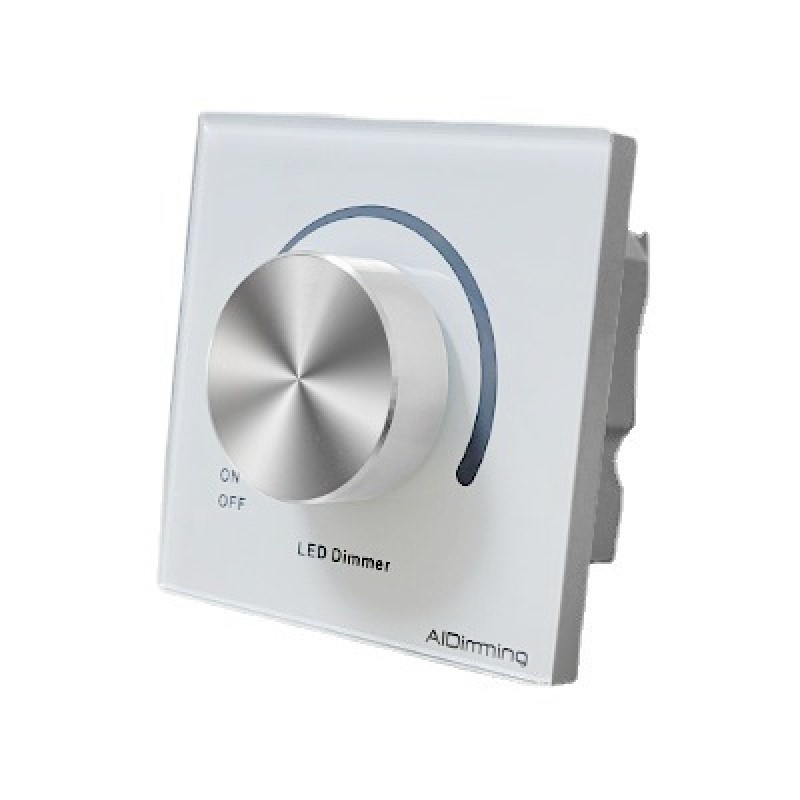
Phase cut dimming is one of the most popular and widely used lighting control technologies in homes and commercial spaces today. If you have ever adjusted the brightness of your lights using a rotary dial or slider switch on your wall, you have likely used a phase cut dimmer. This technology has been around since the 1960s and continues to be the go-to solution for controlling light intensity in millions of buildings worldwide.
In simple terms, a phase cut dimmer modulates the line power signal to reduce power to the light fixture, which lowers the light output. Understanding how phase cut dimmers work can help you choose the right dimming solution for your lighting needs.
What is Phase Cut Dimming?
Phase cut dimming operates by turning the AC mains power supply to the LED light on and off twice in every mains cycle. This process reduces the flow of electrical energy to the light, which decreases the light output and enables dimming.
Think of it like a water faucet. When you turn down a faucet, less water flows through. Similarly, a phase cut dimmer controls the flow of electrical power to your lights, allowing you to adjust brightness from very dim to full brightness.
The technology works by interrupting the AC voltage waveform at specific points. The amount that’s cut off is measured by the phase angle, and if the dimmer cuts off 90 degrees of each half cycle, the effective voltage applied to the lamp is reduced by half.
History of Phase Cut Dimmers
In 1959, Joel Spira invented the SCR (silicon controlled rectifier) controlled dimmer, and a year later, Eugene Alessio announced a TRIAC (Triode for AC) controlled dimmer. These inventions revolutionized lighting control and made it possible for homeowners to easily adjust their lighting levels.
These thyristor-based controls remain the foundation of dimmer technology today, though newer technologies like IGBT (Insulated Gate Bipolar Transistor) are also being used in modern dimmer designs.

Types of Phase Cut Dimming
There are two main types of phase cut dimming technologies, each with its own characteristics and best-use applications.
1. Leading Edge Dimming (Forward Phase Dimming)
Leading edge dimming cuts off the wave of the AC mains voltage on the leading edge, from the beginning. This type is also commonly called TRIAC dimming because it uses a TRIAC component to control the power.
How It Works:
The dimmer delays the turn-on of every half wave until the phase angle set by the dimmer control is reached, then naturally turns off at the current zero crossing.
Advantages:
- Lower cost compared to trailing edge dimmers
- Simpler design with fewer components
- More widely available in the market
- Compatible with traditional incandescent and halogen lights
Best Applications:
- Incandescent bulbs
- Halogen lamps
- Lights connected to magnetic transformers
- Multiple light fixtures on one circuit
2. Trailing Edge Dimming (Reverse Phase Dimming)
Trailing edge dimming naturally turns on at the current zero crossing and then turns off prematurely before the end of the natural sine wave. This type is also known as ELV (Electronic Low Voltage) dimming.
How It Works:
The dimmer uses MOSFET or IGBT components to start power delivery at the beginning of each wave cycle and cuts it off before the cycle ends. This creates a smoother waveform with less electrical noise.
Advantages:
- Smoother dimming control
- No buzzing or humming noise
- Lower minimum load requirements
- Better suited for LED lights
- Less electrical interference
Best Applications:
- LED bulbs and fixtures
- Low-wattage lighting systems
- Single or small groups of LED lights
- Modern residential lighting
- Electronic transformers
How Phase Cut Dimmers Work With Different Light Types
With Incandescent Bulbs
Incandescent bulbs are the easiest lights to dim with phase cut technology. Incandescent lamps use the average electrical power supplied to pass through a resistive wire that glows, and when there is less power supplied, the wire glows less and makes less light.
With LED Lights
LED lights are more complex because they require special LED drivers. LED lamps extract all the electrical power they need from the short voltage pulses that a phase dimmer provides and use extra electrical circuits to measure the pulse width and work out a dimming level.
This is why not all LED bulbs work with all dimmers. The LED driver must be specifically designed to interpret the chopped AC signal from the dimmer and convert it into appropriate DC power for the LEDs.
Compatibility Challenges
Early LED fixtures with phase-cut systems were generally unsatisfactory, with dimming below 30% brightness being unreliable. Fixtures would sometimes pop on unexpectedly or cycle erratically between zero and full brightness.
Modern LED drivers have solved many of these issues, but it’s still important to check compatibility between your dimmer and LED lights.
Benefits of Phase Cut Dimming
1. Cost-Effective Solution
Phase cut dimming is one of the most affordable dimming technologies available. The dimmers are relatively inexpensive, and installation is straightforward for most electricians.
2. Easy Installation
Most phase cut dimmers can be installed with just two wires, making them easy to add to existing lighting circuits without major rewiring.
3. Wide Availability
Leading edge dimmers are by far the more common phase-cut dimming control system, making them easy to find at hardware stores and electrical supply shops.
4. Precise Control
Phase cut dimming technology allows for precise and responsive control of the luminous flux of connected LED lights, even when operating at low dimming levels.
5. Energy Savings
By reducing the power sent to your lights, you save energy and reduce your electricity bills. Dimming lights to 50% brightness can save significant energy over time.
6. Extended Bulb Life
Dimming your lights reduces the stress on bulbs, particularly incandescent and halogen types, which can significantly extend their lifespan.
7. Mood and Ambiance Control
Having the ability to adjust lighting levels lets you create different moods and atmospheres in your spaces, from bright task lighting to soft ambient lighting.
Applications of Phase Cut Dimmers
Residential Lighting
Phase cut dimming is extremely popular in homes for:
- Living rooms and bedrooms
- Dining areas
- Hallways and staircases
- Bathroom vanity lighting
- Kitchen task lighting
- Home theaters
Commercial Spaces
Businesses use phase cut dimmers for:
- Retail stores and showrooms
- Restaurants and cafes
- Hotels and hospitality
- Office spaces
- Conference rooms
Specialized Applications
Phase cut technology is suitable for implementation with spotlights, downlights, LED panels, and indoor SELV installations.
Choosing the Right Phase Cut Dimmer
Consider Your Light Type
The first step is identifying what type of lights you want to dim:
- For LED lights: Trailing edge dimmers are usually better
- For incandescent/halogen: Leading edge dimmers work well
- For mixed installations: Universal dimmers that support both types
Check Wattage Requirements
Every dimmer has a minimum and maximum wattage rating. Any dimmer switch or controller has a minimum and maximum wattage load, and as long as the lights paired with the dimmer sit within these tolerances, lighting will dim beautifully.
Important Considerations:
- LED lights use much less wattage than incandescent bulbs
- A single LED bulb might be too low for some dimmers’ minimum load
- You may need to connect multiple LED fixtures to meet the minimum load
- Calculate total wattage of all lights on the circuit
Verify LED Driver Compatibility
Not all LED lights are dimmable. Look for:
- “Dimmable” marking on the LED bulb or fixture packaging
- Specification of dimmer type (leading edge, trailing edge, or universal)
- Manufacturer’s compatibility list
- Reviews from other users with similar setups
Smart Dimming Options
With wireless technology becoming more popular, it is possible to control devices at multiple locations, with Bluetooth dimmers allowing control via mobile apps.
Modern smart dimmers offer:
- Control from anywhere via smartphone
- Voice control integration
- Scheduling and automation
- Scene creation
- Remote control options
Installation and Wiring
Basic Two-Wire Installation
Most phase cut dimmers connect with just two wires:
- Line (hot) wire from the power source
- Load wire going to the light fixture
Three-Wire Installation
Some advanced dimmers require three wires:
- Line (hot) wire
- Load wire to the light
- Neutral wire for powering the dimmer electronics
More sophisticated dimmers require more power for their electronics and have an added wire provided to power their electronics.
Safety Considerations
- Always turn off power at the circuit breaker before installation
- Use a voltage tester to verify power is off
- Follow manufacturer’s installation instructions
- Consider hiring a licensed electrician for complex installations
- Check local electrical codes
Common Issues and Troubleshooting
Flickering Lights
Flickering can be caused by:
- Incompatible dimmer and LED driver combination
- Dimmer wattage too high or too low for the load
- Poor quality LED bulbs
- Loose wiring connections
Solution: Try a different dimmer type (switch from leading to trailing edge), verify compatibility, or replace LED bulbs with better quality dimmable versions.
Buzzing or Humming Noise
Leading edge dimmers can generate spikes when voltage is suddenly activated from the zero point, leading to inductor oscillation that creates a buzzing noise.
Solution: Switch to trailing edge dimmers, which don’t produce this noise, or use dimmer-compatible bulbs designed to minimize noise.
Limited Dimming Range
Some LED lights won’t dim below 30% or won’t reach full brightness.
Solution: This often indicates incompatibility between the dimmer and LED driver. Try a universal dimmer or choose LED bulbs specifically tested with your dimmer model.
Lights Not Turning On
If lights won’t turn on at all:
- Check that the dimmer is not set to minimum
- Verify the load meets the dimmer’s minimum wattage
- Test with a different bulb to rule out bulb failure
- Check all wire connections
Multiple Lights Flickering at Different Rates
This usually means different bulbs have different compatibility with your dimmer.
Solution: Use identical bulbs from the same manufacturer on one dimmer circuit.
Phase Cut Dimming vs. Other Dimming Technologies
Phase Cut vs. 0-10V Dimming
0-10V dimming uses a separate low-voltage control signal:
- Requires additional control wiring
- More common in commercial applications
- Better for large installations
- More expensive to install
Phase Cut vs. DALI Dimming
DALI (Digital Addressable Lighting Interface) is a digital protocol:
- Allows individual control of each light
- Requires more complex setup
- Better for commercial and architectural lighting
- More expensive but offers greater control
Phase Cut vs. PWM Dimming
Compared to PWM dimming, phase cut dimming is less precise and does not offer as smooth of a dimming curve, but is still highly effective.
Energy Efficiency and Sustainability
Power Savings
Dimming lights saves energy proportionally. If you dim lights to 50% brightness, you use approximately 50% less energy. This adds up to significant savings over time, especially in commercial settings.
LED Efficiency Benefits
When combined with LED technology, phase cut dimming offers:
- Up to 80% energy savings compared to traditional incandescent dimming
- Reduced heat generation
- Lower cooling costs in summer
- Smaller carbon footprint
Environmental Impact
By using less electricity, phase cut dimming helps:
- Reduce power plant emissions
- Decrease energy demand during peak hours
- Extend the life of lighting infrastructure
- Support sustainability goals
Future of Phase Cut Dimming
Integration with Smart Home Systems
Modern phase cut dimmers are increasingly being integrated with:
- Home automation platforms
- Voice assistants (Alexa, Google Home, Siri)
- IoT ecosystems
- Wireless control protocols
Improved LED Compatibility
Manufacturers continue to improve:
- LED driver designs for better dimming performance
- Universal dimmers that work with more lights
- Smoother dimming curves
- Elimination of flicker and noise
Hybrid Technologies
New dimmers are combining:
- Phase cut dimming with wireless control
- Multiple dimming protocols in one device
- Advanced microprocessors for better waveform control
- Adaptive dimming that learns light behavior
Tips for Best Performance
1. Buy Quality Components
Invest in reputable brands for both dimmers and LED bulbs. Cheaper components often have compatibility issues.
2. Test Before Installation
Before installing dimmers throughout your home, buy one dimmer and one bulb to test compatibility.
3. Keep Updated Lists
Many manufacturers maintain online compatibility databases showing which dimmers work with which LED bulbs.
4. Consider Load Requirements
For LED installations, ensure your total load exceeds the dimmer’s minimum wattage requirement but stays below the maximum.
5. Use Identical Bulbs
When multiple bulbs are on one dimmer, use the same model from the same manufacturer for consistent dimming.
6. Avoid Mixing Load Types
Don’t mix LED, incandescent, and halogen lights on the same dimmer circuit unless using a specifically designed universal dimmer.
Conclusion
Phase cut dimming remains one of the most practical and cost-effective solutions for controlling lighting in homes and businesses. Whether you choose leading edge or trailing edge technology depends on your specific lighting setup, with LED lights generally performing better with trailing edge dimmers.
The technology has evolved significantly since its invention in the 1960s, and modern phase cut dimmers offer excellent performance, especially when properly matched with compatible LED drivers. Phase cut dimming provides high efficiency and high-quality dimming ranging from 1-100 percent, making it suitable for a wide range of applications.
By understanding how phase cut dimmers work, their benefits, and how to choose the right type for your needs, you can create comfortable, energy-efficient lighting environments that enhance your spaces while saving money on energy costs.
Whether you’re upgrading your home lighting, planning a new installation, or troubleshooting existing dimming issues, phase cut technology offers a proven, reliable solution that continues to adapt to modern lighting needs.